Nunatak Station
A research station set into a rock outcrop in the Antarctic ice sheet.
Marie Byrd Land, Antarctica · 2016–2021
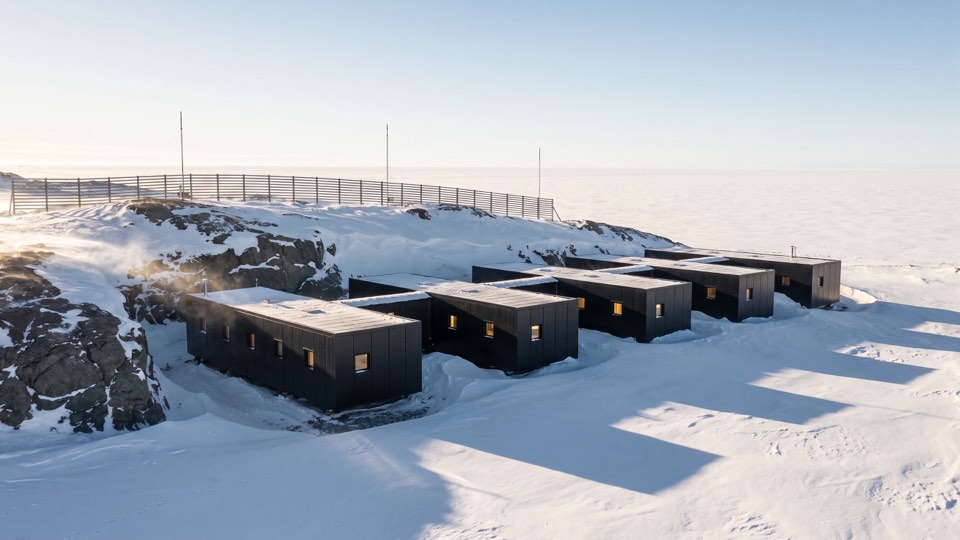
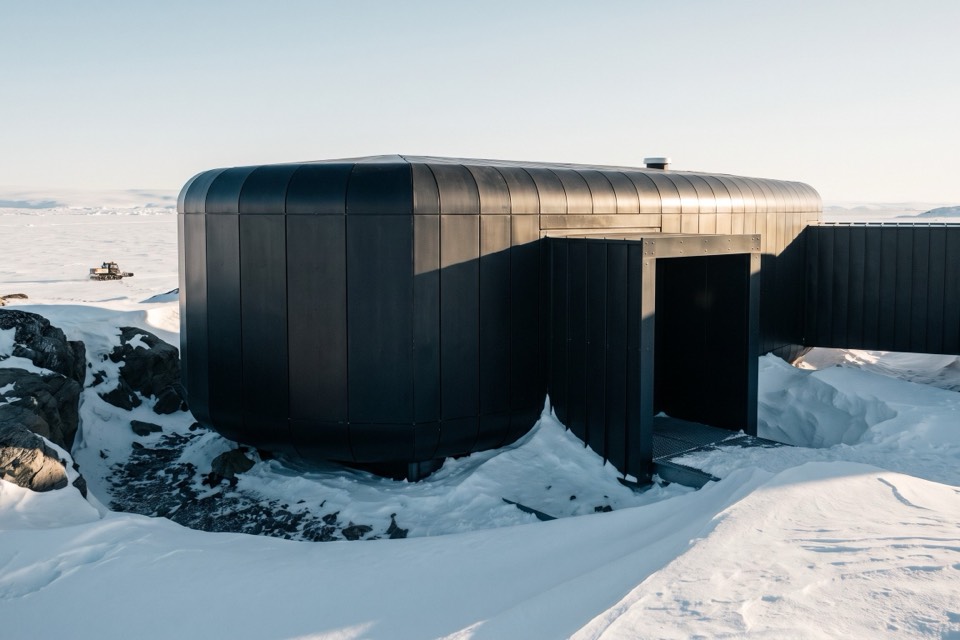
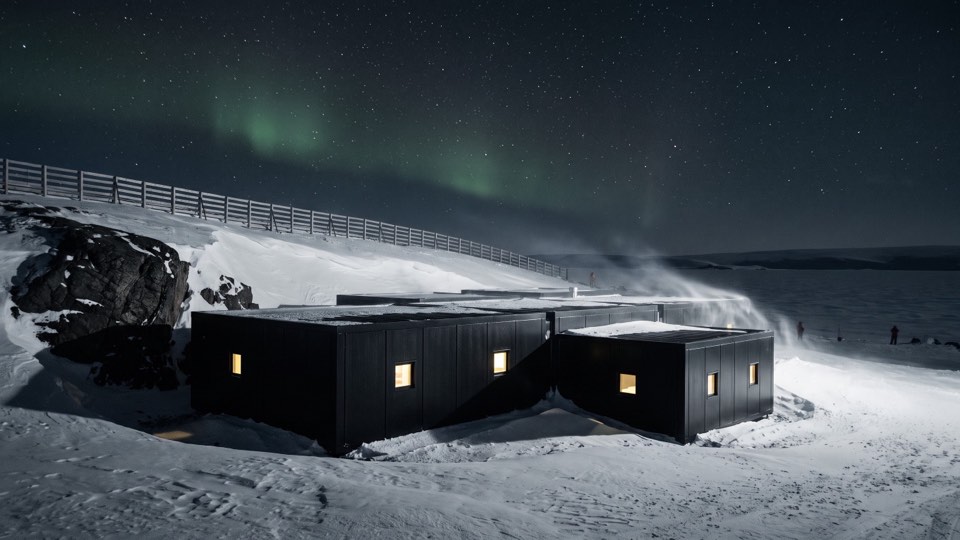
A research station set into the lee slope of a rock outcrop that breaks through the West Antarctic ice sheet, 760 metres above sea level. Its six low modules sit in a bench cut into the rock, with packed snow at their backs and the ice sheet at their feet.
A bench in the rock
A nunatak (a mountain summit buried by ice) gave us a site that does not move. We blasted a bench into its lee slope and set six linked modules into it, so that rock and packed snow shelter three sides of each and only the sunward faces stand clear. The vehicle hall and the fuel and water tanks sit in the deepest cut, 4.5 metres into the rock, where neither wind nor drift reaches them.

Managing the drift
On the ice sheet the wind blows from one direction for most of the year, and it carries snow. A drift wall of steel fencing runs along the ridge sixty metres upwind of the station, so the snow drops there, in a long dune that the station’s own tractor cuts back twice a winter. What reaches the modules slides off their rounded backs. We measured the site for two winters before the fence was set out, and the station has not had to be dug out since.
Down there you get one chance a year to build. Everything has to arrive ready to fit.
Every litre counts
Fuel reaches the station once a year, by tractor traverse across the ice. Heat from the generators, the kitchen and the laboratories is gathered into one loop that warms every room and melts snow for water, and walls with 40 centimetres of insulation keep it in: the station burns about half the fuel of a conventional base its size. Washing and flushing water is treated and used again, so the snow-melter runs for an hour a day rather than four.
Images: Instinctual Group.