Halocline Station
A research station on the seabed, twenty-two metres down.
Red Sea coast · 2019–2024
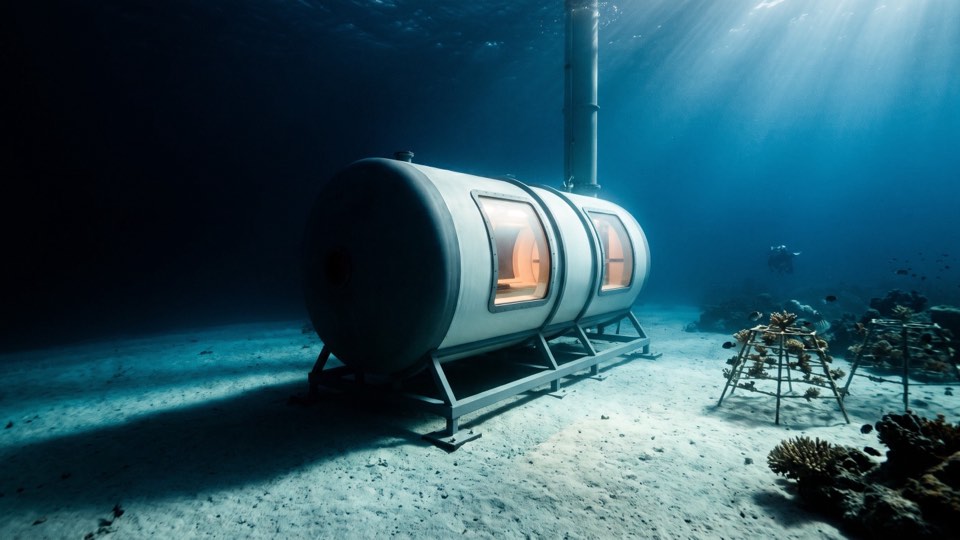
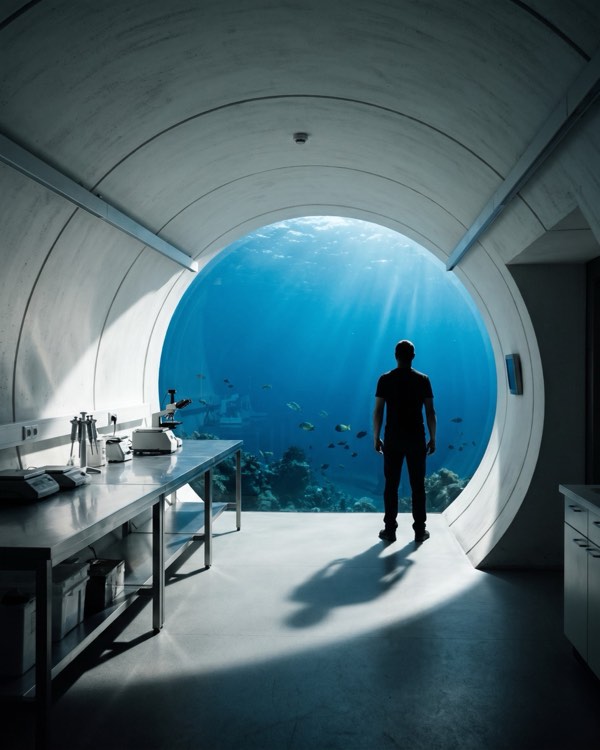
A marine research station resting on the seabed off the Red Sea coast, twenty-two metres below the surface. Inside, scientists work at one atmosphere, in dry clothes, beside a coral reef they can study through the largest windows we have built.
One atmosphere, twenty-two metres down
The station is a 9-metre steel and composite hull holding normal surface pressure, so researchers come and go without decompression. Two curved acrylic windows, each 180 millimetres thick, face the reef. We tested full-size window sections in our Rotterdam tank for eighteen months before the first was cast.
Resting, not anchored
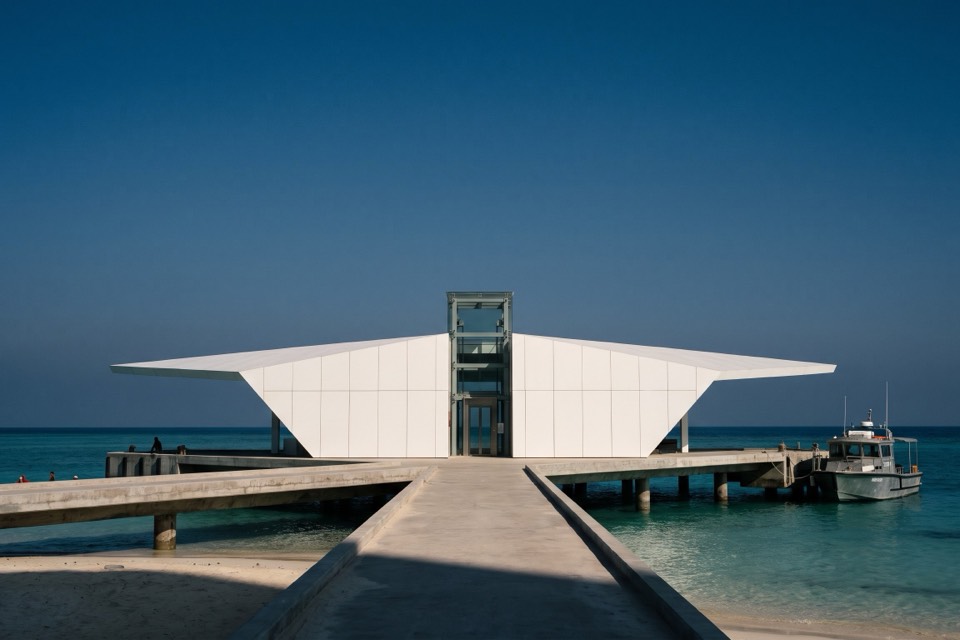
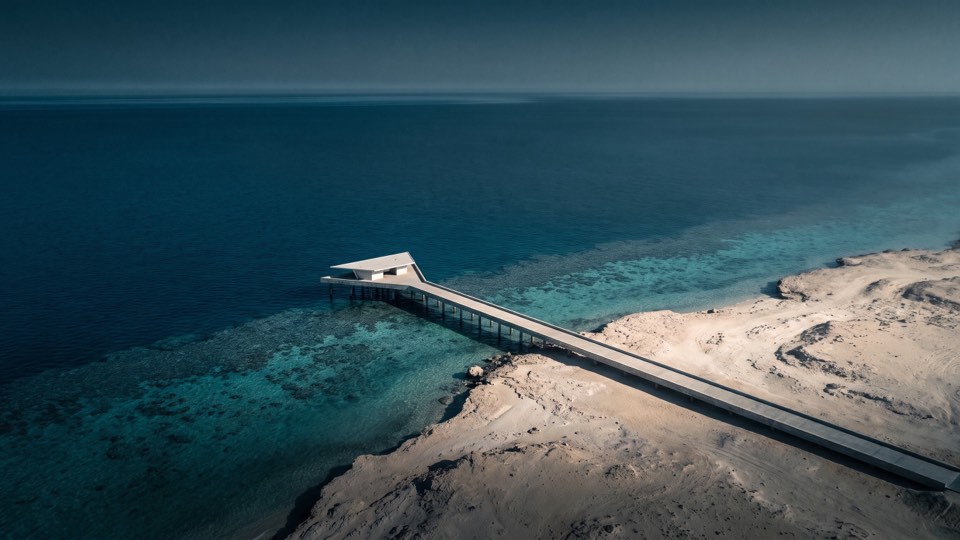
The hull sits on a ballasted steel frame laid on the sand, away from the living reef, and needs no piles. A vertical access tube connects it to the surface pavilion on the pier, where boats moor and visitors are briefed. Seawater drawn from forty metres cools the station; the pavilion’s roof makes its power.
The reef was here first. The building had to be the quietest thing on the seabed.
A nursery around the hull
Steel frames around the station carry a coral nursery grown from local fragments. Nearly two years after opening, the frames hold more than six thousand colonies, and the station’s own sensors log the water around them every ten minutes.
Images: Instinctual Group.